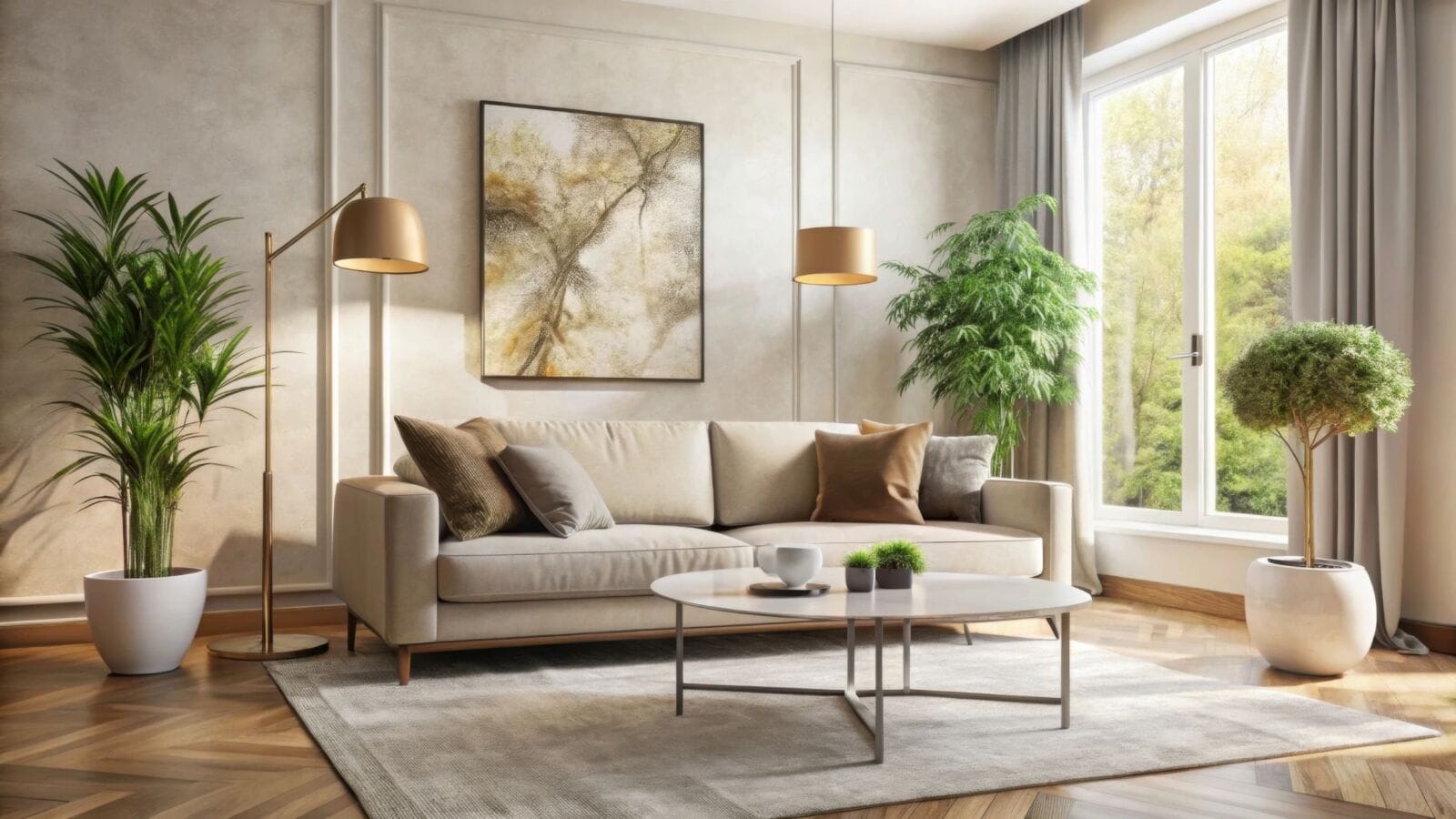
Artificial trees have become a powerful and increasingly popular tool in interior design, especially in spaces that need visual height, balance, and structure. Unlike smaller decorative plants, trees naturally draw the eye upward, helping rooms feel more complete, intentional, and proportionally balanced.
In many interiors, especially modern ones with open layouts and high ceilings, something is often missing at eye level or above. Artificial trees help fill that visual gap without overwhelming the space. They create a strong focal point while still feeling soft and organic, which is why designers frequently use them to anchor rooms.
Real indoor trees, however, come with several challenges. They require consistent access to natural light, precise watering schedules, appropriate humidity levels, and enough room for root systems to develop. In apartments, offices, and commercial environments, these conditions are often difficult — or impossible — to maintain long-term. Artificial trees eliminate these limitations while preserving the same architectural presence and visual impact.
Designers commonly place faux trees in corners, open-plan living areas, entryways, and reception zones. Because artificial trees do not grow, shed leaves, or change shape, they remain visually stable over time. This predictability is particularly valuable in professional and commercial interiors, where frequent rearrangement or plant replacement is impractical.
Cleanliness is another important advantage. Artificial trees don’t drop leaves, attract insects, or require soil, making them ideal for offices, hotels, restaurants, and public spaces where hygiene and low maintenance are essential. This also reduces ongoing upkeep costs and staff involvement.
Artificial trees offer a high level of creative freedom as well. They can be placed in low-light areas, windowless rooms, or unconventional layouts where real trees would struggle to survive. This flexibility allows designers to balance and soften spaces that might otherwise feel empty, cold, or unfinished.
From personal experience, artificial trees are one of the easiest ways to elevate an interior without committing to long-term care. When chosen thoughtfully, they feel intentional rather than decorative.
For those exploring interior solutions that provide visual scale and greenery without ongoing maintenance, this artificial tree collection offers a practical overview of modern options.