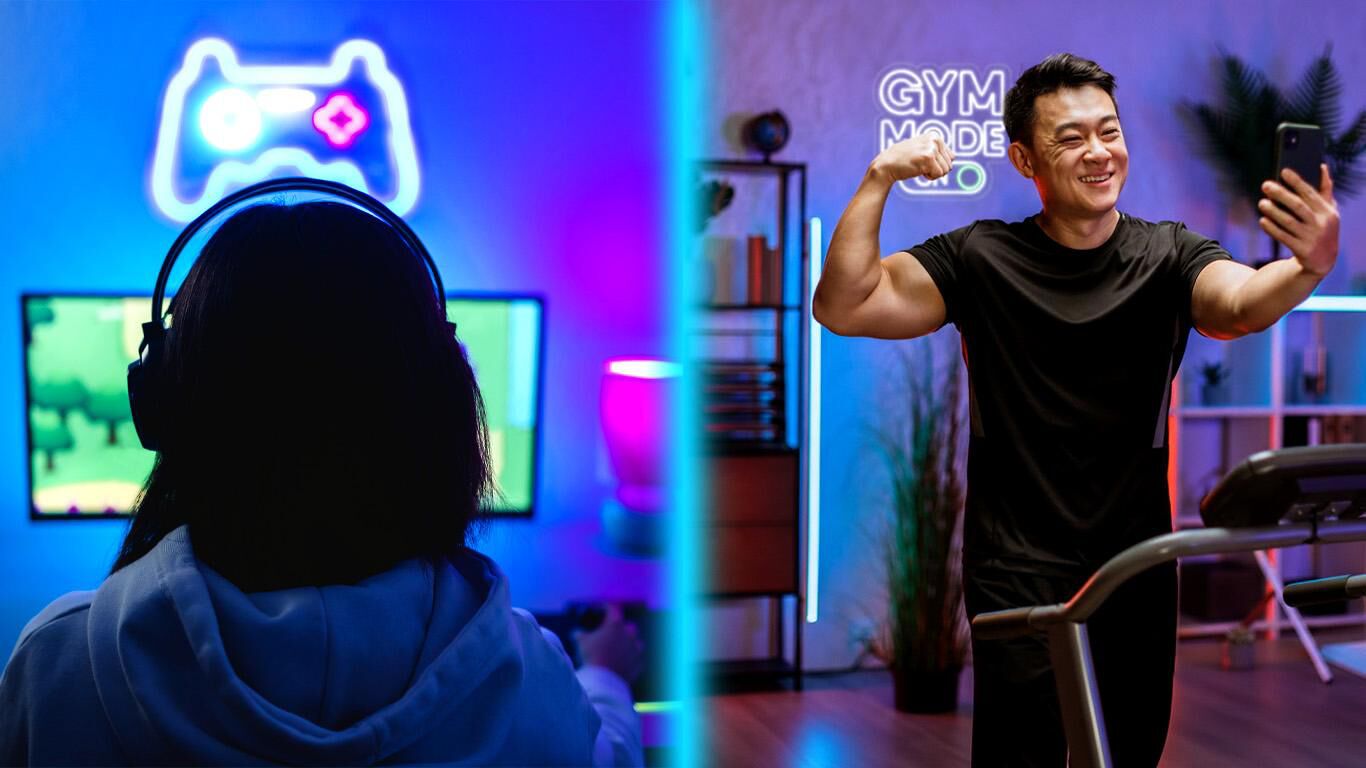
The moment you step into a thoughtfully designed gaming room or home gym, something shifts. It’s not the equipment that matters, though. It’s not the furniture either. It’s the atmosphere, and the atmosphere lives in lighting.
The proof is in the market. The global neon signs market reached $2.53 billion in 2025 and is expected to hit $3.63 billion by 2032, growing at 5.3% annually. Meanwhile, home fitness spaces are booming. The home gym equipment market was valued at $12.4 billion in 2025 and is projected to reach $19.6 billion by 2035. These numbers reflect something real: people are serious about building spaces that matter to them.
Neon signs make this accessible. Providers like Neon Designs offer affordable custom neon sign solutions that let anyone create the personalized space they’ve imagined without breaking their budget.
Why Now Is the Right Time to Personalize Your Space
Three shifts are converging. First, dedicated gaming and fitness spaces have moved from a luxury status to a standard. Building a gaming setup used to be a niche pursuit. Now, a custom space for work, play, or training feels normal. When you’re investing that kind of intention into a room, it needs to feel like yours, not generic.
Second, both sectors have become technically complex. RGB lighting systems sync with games. Smart fitness equipment tracks every rep. Cloud-based workout apps personalize every session. All that technology is powerful, but it can feel sterile. Neon brings the human element back. It’s intentional. It’s personal.
Third, people understand that the environment shapes behavior. This isn’t news to scientists, but it’s becoming mainstream knowledge. Your space influences how you perform, how long you stay, and whether you come back tomorrow. That awareness is driving serious investment in design.
The Psychology of Lighting in Gaming and Fitness Spaces
Before discussing why neon works, it helps to understand what lighting actually does.
Light influences mood, focus, and relaxation at a neurological level. Different wavelengths and color temperatures trigger different responses in your brain. Bright, cool-toned lights increase alertness and motivation, perfect for high-intensity zones. Softer, warmer lighting creates relaxation, ideal for recovery areas.
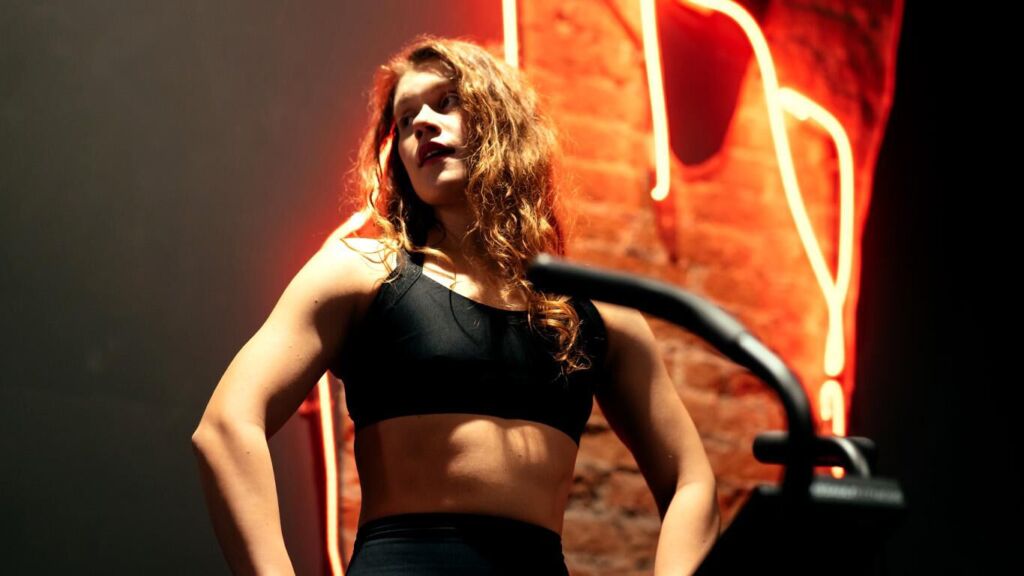
Most standard home setups rely on single overhead fixtures, usually fluorescent or harsh LED. The problem: fluorescent lighting creates stimulation when people actually want to focus. It’s jarring for a dedicated fitness space where you need to feel energized but in control. It’s equally wrong for gaming, where you spend hours at a desk and need a balance between engagement and comfort.
Layered lighting solves this. Task lighting handles function. Ambient background light establishes mood. Accent lighting, where neon excels, creates the emotional anchor. That’s the piece that makes a space feel intentional rather than improvised.
Why Neon Is the Perfect Fit for Personalization
Neon signs, whether traditional glass or modern LED flex, do something other lighting can’t. They’re not neutral. A neon sign communicates something about the person who owns it, 24/7.
In gaming spaces, this matters because gamers build identity around their setups. Your space becomes an extension of who you are. Want retro nostalgia or sleek futurism? Dark and moody or vibrant and energetic? A custom neon sign answers that immediately. Gamers choose gamer tags, streamer logos, gaming imagery, personal mantras, whatever reflects their style.
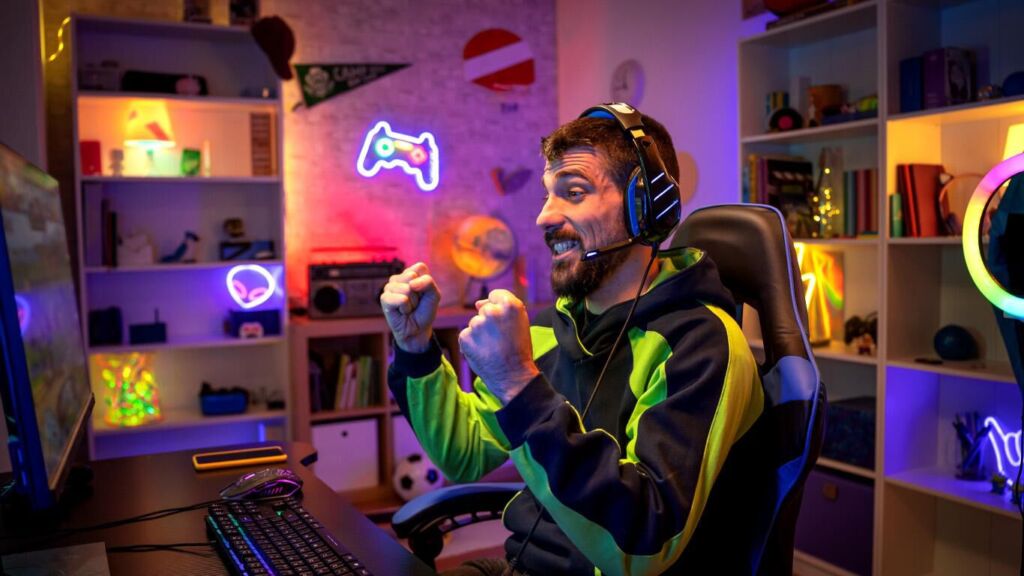
The gaming furniture market is growing at 14.88% annually and is projected to exceed $8.6 billion by 2035. High-end gaming setups now regularly feature RGB panels synced with in-game events. Gaming neon signs work alongside that tech as the focal point that ties the entire aesthetic together.
In home gyms, the principle is identical, but the payoff is different. Walking into a gym to train hard requires psychological preparation. You need to feel like you’re entering somewhere that matters. A neon sign that says “Rise,” “Grind,” or your personal mantra isn’t decoration. It’s a psychological anchor, a constant reminder of why you’re there.
Research on personalized fitness environments shows something clear: when people design spaces around their identity, they use them more. They stick with workouts longer.
The space becomes part of their routine instead of another piece of equipment gathering dust. Fitness facilities that integrate custom neon signage report that the signs serve both as visual motivation and as social media content. People want to film themselves training in front of them. That motivation matters.
Layering Light: How Neon Signs Work with Other Systems
Neon performs best as part of a broader lighting strategy. You need task lighting for function. You need ambient lighting to avoid a cave-like feeling. Then you add neon as the emotional anchor.
RGB gaming lighting systems have evolved considerably. Modern LED strips sync with music, adjust in real-time based on gameplay, and create dynamic effects that immerse you in what you’re doing. But they can feel impersonal. A sharp neon sign flanked by responsive RGB strips creates something technically sophisticated and emotionally engaging at the same time.
For fitness spaces, the research is clear about what works. Gym design experts call for spaces with intentional lighting zones, bright, cool-toned light for high-intensity areas where you need alertness, and softer, warmer lighting in recovery zones where you’re cooling down or stretching. A motivational neon sign positioned as a focal point does exactly this. It draws your eye, makes the space feel intentional, and signals that this is a place where you do serious work.
The warmth of classic neon, typically 2000-2500K, pairs perfectly with ambient warm lighting. Together, they create an environment that feels both energizing and comfortable. That balance is exactly what sustains long gaming marathons and consistent workout routines.
Personalization as a Motivator: The Data Proves It
Studies on fitness motivation consistently show that personalization increases adherence and long-term success. When someone designs their space around their identity, they use it. When the space reflects their personality and goals, they stick with it longer.
Neon makes personalization tangible and visible. A custom sign communicates something specific about you. That signal matters to you and to anyone else who sees it.
This is why streaming setups have aggressively embraced neon. For streamers, aesthetics matter because it’s part of the content. But for anyone building a personal space, the same principle applies: intentional design drives usage.
The economics back this up. Most homeowners spend somewhere between $5,000 and $35,000 to build a meaningful gaming room, with an average investment of around $20,000.
That level of commitment signals intention. People aren’t slapping together whatever’s on sale. They’re building something they plan to use and enjoy. The gaming market itself is projected to reach $188.8 billion in 2025, reflecting how seriously consumers take their entertainment spaces.
In that context, a custom neon sign isn’t extravagant. It’s a finishing touch that ensures the entire investment feels cohesive and personal.
Home gyms follow the same pattern. Compact, multi-functional fitness spaces are dominating right now, with people prioritizing versatility and personalized motivation over generic setups.
A neon sign reinforcing your specific fitness goal becomes psychological scaffolding every time you train. That matters more than any piece of equipment.
Beyond Aesthetics: The Functional Benefits
Neon signage serves practical purposes in gaming and fitness spaces, directly impacting how well the spaces function.
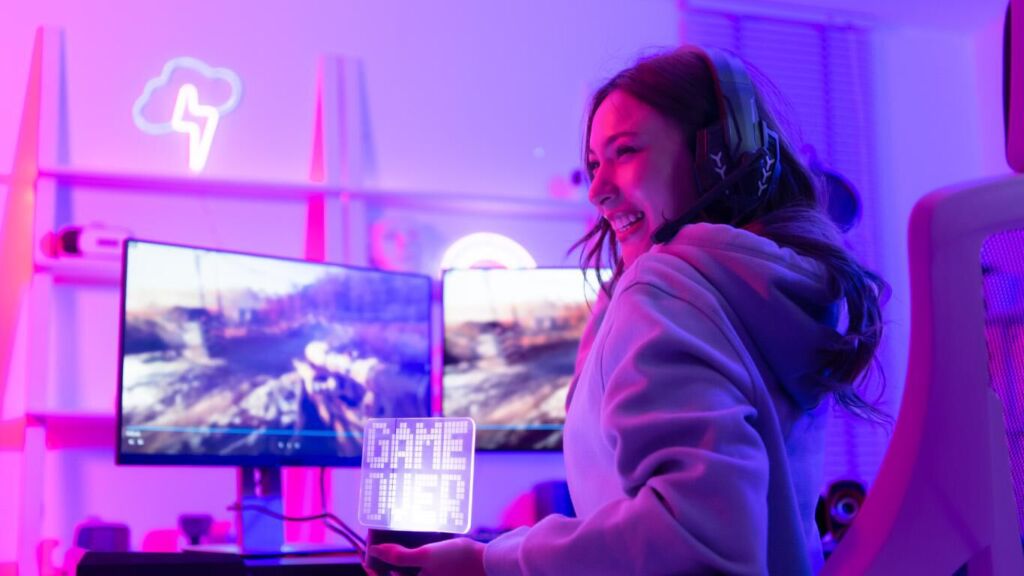
Focal point creation – A well-positioned neon sign naturally draws the eye and anchors the entire room. In gaming setups, the monitor and neon sign work together to create a visual hierarchy. In fitness spaces, a neon sign above equipment defines that zone as the primary training area.
Space definition – In multi-functional spaces, a neon sign helps define different zones. That corner where the gym equipment lives looks intentional when there’s a motivational neon sign above it. That gaming station feels separated and special when marked by custom neon.
Circadian rhythm support – Neon lights with warmer color temperatures support healthier circadian rhythms compared to harsh fluorescent lighting. People sleep better, recover better, and maintain better mental health when their evening spaces don’t bathe them in blue-spectrum light.
Minimal visual clutter – Unlike complex RGB systems requiring constant software management or standard lighting fixtures that take up space, neon is elegantly simple. It’s there, it’s clear, it does what it does. The LED neon flex segment now controls 43.2% of the global neon market, underscoring consumers’ preference for energy-efficient, low-maintenance solutions.
The Practical Design Angle
If you’re adding neon to your gaming room or home gym, here’s what actually works.
In gaming spaces – Position your neon sign where it’ll be visible on camera if you stream. Sync its colors with the RGB systems you have, or let it be the one element that doesn’t change colors for visual balance. Think about sightlines. Will you see it when you’re at your desk? When you’re relaxing? Place it accordingly.
In fitness spaces – Mount your neon sign at eye level, positioned where you’ll see it during your most challenging moments. Its message should hit differently when you’re fatigued. Not something cheesy that makes you roll your eyes, but something that actually moves you. Custom neon signs can be tailored to whatever message resonates with your goals, keeping your investment affordable while ensuring personalization matters.
Lighting integration – Use your neon sign as the primary accent light, then build ambient and task lighting around it. This prevents visual competition and keeps the space from feeling chaotic.
Color selection – Warm whites, soft blues, and cool greens work best. Avoid neon colors so bright that they cause eye strain during extended time in the space. Remember, you’ll be here for hours, not minutes.
Create Spaces That Inspire, Not Just Function
Creating a gaming room or home gym is about more than buying equipment. It’s about building an environment where you’ll actually show up, perform well, and feel good about the time you’re spending there.
Neon signs, especially personalized ones, are among the most efficient ways to make that happen. They’re visible, constant reminders that the space is intentional and personal. They work with lighting design principles that support focus and motivation. And honestly, they look genuinely cool.
Whether you’re building a competitive gaming setup or a home fitness sanctuary, the right neon sign can be the difference between a space that functions and one that inspires. The market is speaking clearly: spaces are no longer just tools. They’re expressions of identity. People are investing seriously in making them personal, and it’s working.