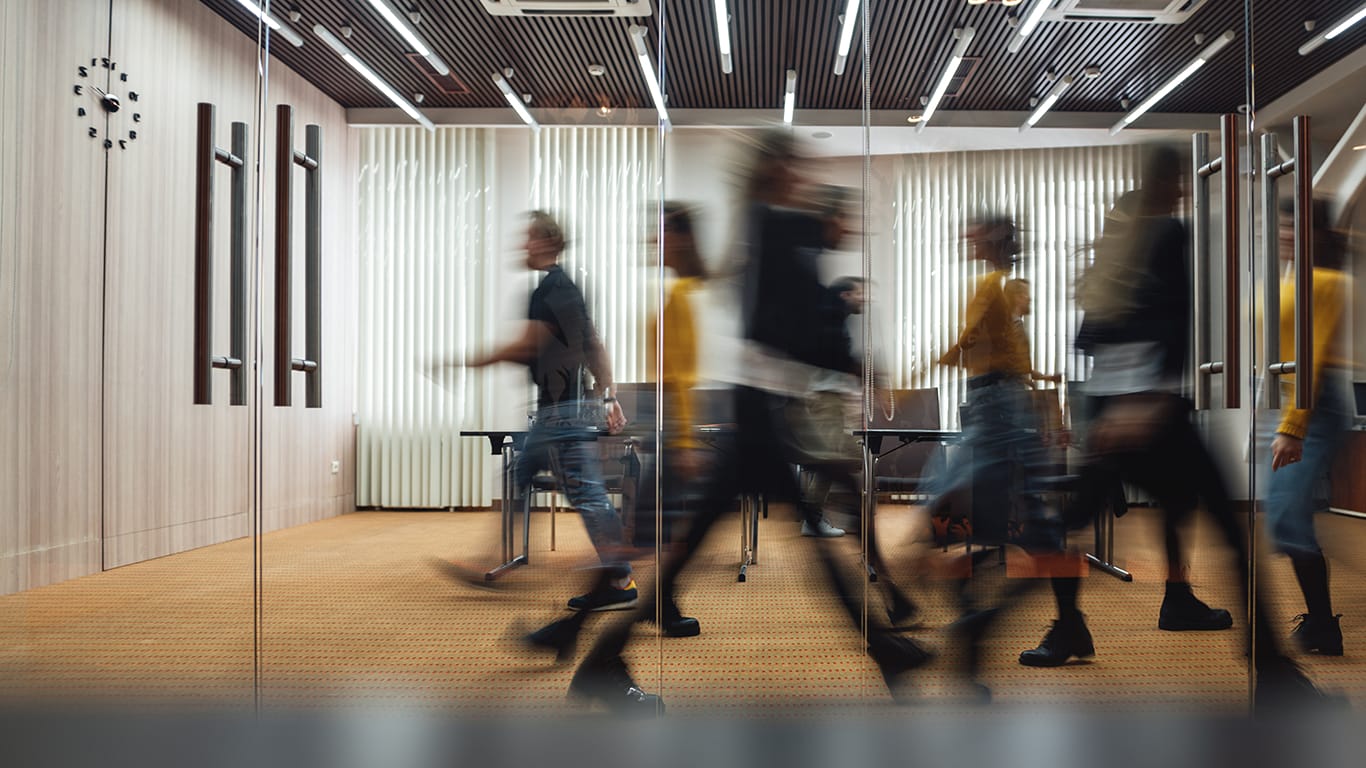
Covid-19. Quarantine. Something shifted after 2020. Offices didn’t bounce back the way business analysts predicted. Teams started splitting their weeks between kitchen tables and conference rooms, and companies scrambled to figure out what that meant for their physical spaces.
Here’s the thing: when you rent office space now, you’re not just buying square footage. You’re investing in an ecosystem that accommodates people who show up three days a week, fully remote collaborators dialing in from coffee shops, and the occasional all-hands meeting. The old cubicle farm approach? Dead. The open floor plan everyone copied from Silicon Valley? Struggling.
Getting your hybrid work model right directly impacts how much your team accomplishes. A poorly designed setup creates friction—people can’t find quiet corners for calls, meeting rooms sit empty on Tuesdays but impossible to book Thursdays. Smart workplace strategy eliminates these headaches before they snowball.
According to CBRE’s 2023 occupancy report, companies waste $150 per square foot annually on underutilized office space. That’s real money vanishing because nobody thought through how teams would actually use the building.
How Hybrid Work Environments Affect Employee Focus
Your brain doesn’t operate the same way at home versus in an office. Neuroscientists at Stanford found that environmental cues trigger different cognitive modes. A home office with the laundry pile in your peripheral vision? That activates domestic task-switching impulses. A designated workspace signals “focus time” to your prefrontal cortex.
The best setups create what environmental psychologists call “activity-based working zones.” Think of it like mental gear shifting:
- Deep work pods: Enclosed, quiet, zero visual distractions
- Collision spaces: Open areas designed for spontaneous conversations
- Transition zones: Coffee bars and lounges that signal “decompression” between tasks
Microsoft’s research campus in Redmond redesigned 4.9 million square feet around these principles. Internal surveys showed a 23% increase in reported creative output—specifically from teams using dedicated focus rooms rather than shared desks.
The catch? People need autonomy over which zone they use. McKinsey’s return-to-office research confirms this—employee satisfaction drops 34% when flexibility disappears.
Workspace Design Features That Boost Productivity
Forget the ping pong tables. Let’s talk about what research confirms makes a difference.
Office Acoustics and Sound Management
Sound travels. In hybrid offices, you’ve got half the team on video calls while others need silence. Steelcase’s workplace research found that acoustic privacy ranks as the #1 environmental factor affecting concentration.
Practical solutions:
| Element | Impact |
| Sound-masking systems | Reduces intelligible speech distraction by 51% |
| Acoustic ceiling panels | Drops ambient noise 8-12 decibels |
| Phone booth pods | Eliminates meeting room competition |
Buildings pursuing WELL Building Standard certification must meet specific acoustic performance thresholds—a benchmark worth considering for any serious office layout redesign.
Office Lighting Design for Productivity
Fluorescent tubes flatten everyone’s energy. Human-centric lighting systems—ones that shift from cool blue tones in the morning to warmer hues after lunch—showed a 15% productivity boost in a 2022 Cornell study. Companies like Philips and BIOS Lighting manufacture these systems specifically for office environments.
Hybrid Meeting Room Technology
Nothing kills hybrid productivity faster than hunting for an available monitor cable. Built-in docking stations at every workspace, consistent tech setups across rooms, QR codes for instant meeting room access—these small touches add up. WeWork’s most productive locations share one trait: technology friction approaches zero.
Workspace management platforms like Robin, Envoy, Kadence, and Condeco handle the booking logistics. They track workspace utilization patterns automatically.
Hybrid Office Productivity: Case Studies and Data
Speculation bores me. Let’s look at documented outcomes.
Dropbox went “Virtual First” in 2020, then invested $85 million redesigning their San Francisco headquarters as “Dropbox Studios”—hybrid collaboration hubs rather than daily workspaces. Employee engagement scores jumped 13 percentage points within 18 months.
Cisco measured meeting effectiveness before and after their hybrid redesign. Video calls from purpose-built hybrid meeting rooms showed 34% higher participation rates compared to regular conference rooms.
Nationwide Insurance tracked claims processing speed across their hybrid pilot program. Teams using activity-based workspaces completed 11% more claims per week. Same employees. Same workload. Different environment.
One data point that surprises people: JLL’s 2023 workplace survey found that 67% of workers say they’d take a pay cut for a better-designed office. Gallup’s engagement research backs this up—physical workspace ranks among the top five factors influencing employee experience.
Common Hybrid Workspace Design Mistakes to Avoid
Good intentions don’t guarantee good results. Common pitfalls I’ve seen tank hybrid productivity:
The hotel-desk trap. Hot-desking sounds efficient. But humans crave some territorial control. A study from the University of Exeter found that employees with personalized workspaces outperform those in sterile hot-desk environments by 25%. The fix: assigned “home zones” even within flexible office layouts.
Ignoring time-zone math. Your LA team overlaps with London for exactly three hours. If your hybrid design doesn’t include 24-hour-accessible meeting pods for early morning or late evening calls, somebody’s always taking meetings from their car.
Overshooting the collaborative spaces. Not every task requires teamwork. Companies sometimes convert too many focus areas into collaboration zones, then wonder why deep work suffers. The sweet spot? Gensler recommends a 60/40 split: 60% individual focus areas, 40% collaborative.
Forgetting the in-between days. Hybrid means variable headcount. Monday might see 40% attendance while Wednesday hits 85%. Spaces designed for peak capacity feel empty and cold on quiet days. Clever layouts use moveable partitions and bookable “neighborhoods” that scale with daily attendance patterns.
How to Plan Your Hybrid Office Layout
Start with data, not assumptions.
Survey your team. Literally ask: “What tasks need quiet? When do you collaborate most? What frustrates you?” Answers vary wildly by role—engineering needs different configurations than sales.
Run a pilot. Pick one floor or department. Test acoustic solutions, experiment with furniture arrangements, measure satisfaction before scaling. Steelcase found that companies running 3-month pilots made 40% fewer costly mistakes during full rollouts.
Consider booking analytics. Workspace planning tools track which spaces get used versus which collect dust. That data tells you what to expand and eliminate.
Budget for iteration. Your first hybrid design won’t be perfect. Build in flexibility—modular furniture, moveable partitions, technology that travels. The companies winning at hybrid treat offices as evolving experiments.
The Workspace Evolution Continues
Hybrid office design isn’t a one-time project. Teams change, work evolves, and what clicks this quarter might drag next year. The real competitive edge comes from treating your workspace as a living system, one that adapts alongside your people.
Frequently Asked Questions
How does office layout affect employee productivity?
Physical workspace design directly influences focus, collaboration, and energy levels. Research shows factors like lighting, acoustics, and spatial zoning can swing productivity metrics by 15-25%.
What is activity-based working?
Activity-based working (ABW) provides employees with different workspace zones optimized for specific tasks. Employees choose where to work based on what they’re doing, not assigned seating.
How much office space per employee for hybrid setups?
Most hybrid offices now plan for 75-150 square feet per employee, down from the traditional 150-250 square feet.