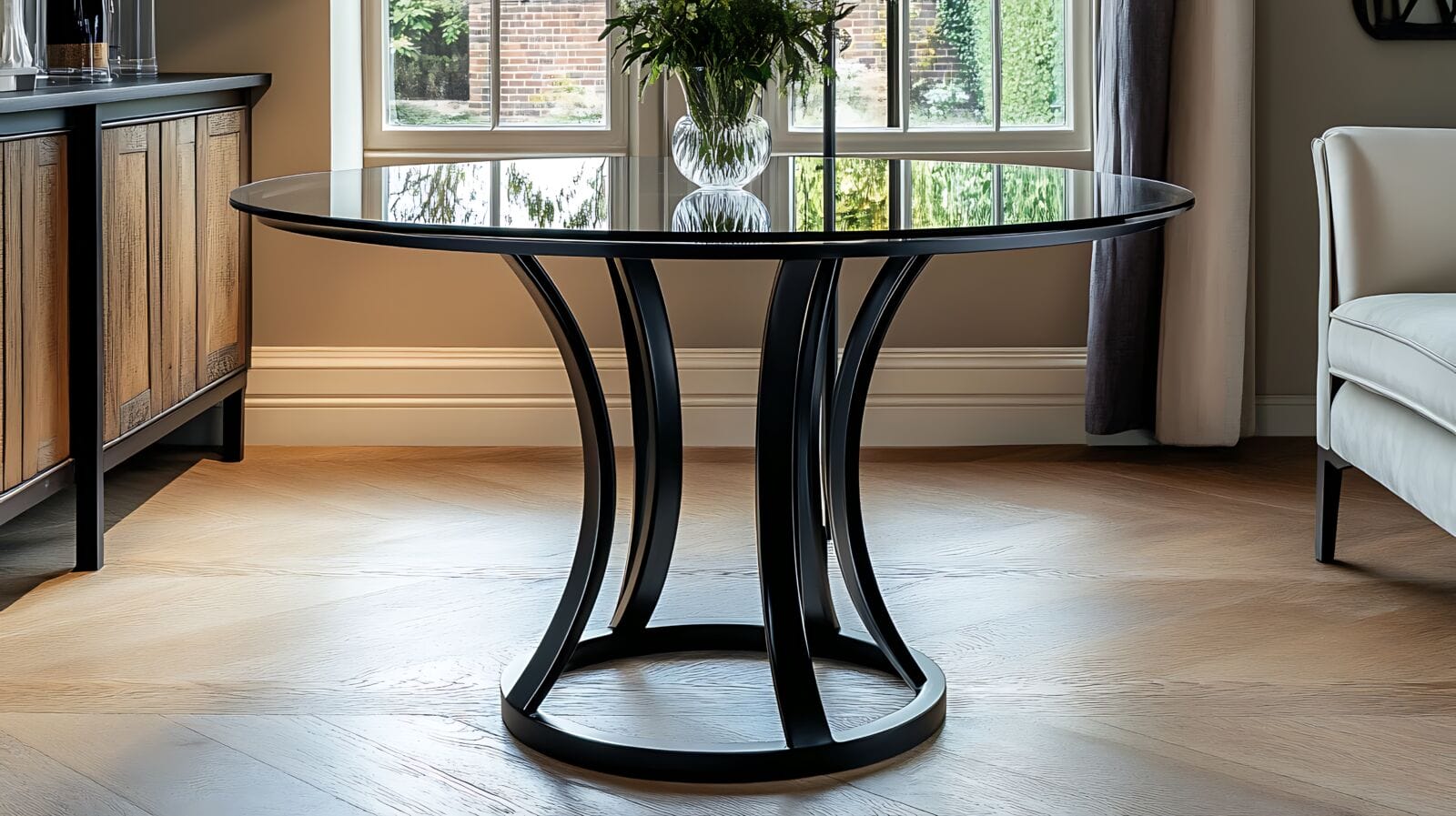
In the realm of interior architecture, design trends cycle with the seasons, but the pursuit of balance, light, and spatial harmony remains eternal. Striking the perfect equilibrium between functional durability and minimalist elegance is a notoriously difficult feat. Heavy wooden furniture can anchor a room but can also suffocate a compact floor plan. Ornate metalwork offers character but often lacks the clean lines demanded by contemporary sensibilities. Enter the ultimate design chameleon: the glass surface. If you are looking to revitalize an aging heirloom or protect a delicate wooden surface, opting for a premium Round Tempered Glass Table Top can instantly elevate your space, providing a seamless blend of resilience and visual weightlessness.
Far from being a mere functional slab, a round glass tabletop acts as an invisible canvas, amplifying the beauty of its base, reflecting natural light, and altering the very psychology of the room it inhabits.
The Science of Strength: Demystifying Tempered Glass
To truly appreciate the value of a high-quality glass tabletop, one must look past its transparent surface and look into the engineering that makes it possible. Standard glass—often referred to as annealed glass—is fragile and unpredictable. When subjected to impact or thermal stress, it breaks into jagged, razor-sharp shards that pose a significant safety hazard. For a piece of furniture that anchors daily human interaction, annealed glass is a liability.
Tempered glass, however, undergoes a rigorous process of extreme thermal heating followed by rapid cooling, a technique known as quenching. This process induces intense compressive stress on the exterior surfaces while maintaining tensile stress in the core. The result is a material that is up to four to five times stronger than standard glass of the same thickness.
Should a tempered glass surface ever succumb to catastrophic impact, it is engineered to fail safely. Instead of splintering into dangerous daggers, it fractures into thousands of small, blunt, pebble-like pieces. This characteristic is why tempering is legally mandated for automotive windows and architectural facades, and why it is absolutely non-negotiable for high-traffic household surfaces like dining tables, coffee tables, and patio furniture.
The Geometry of Connection: Why the Circle Rules the Room
While square and rectangular tables have their place in formal, linear environments, the circle possesses a unique architectural psychology. Angular furniture dictates boundaries, establishes hierarchies, and segments spaces. Round furniture, conversely, invites connection and fosters a sense of organic movement.
1. Eliminating the Visual Barrier
In interior design, “visual weight” refers to how heavy an object looks, regardless of its actual physical mass. A solid dark oak rectangular dining table commands a massive amount of visual weight, dominating the eyesight and making a room feel smaller. A round glass tabletop strips away this barrier entirely. By allowing the eye to travel straight through the surface to the floor, the rug, or the intricate base underneath, it creates an illusion of expansive space. It is the premier choice for urban apartments, sunrooms, and compact dining nooks where square footage is at a premium.
2. Enhancing Spatial Traffic Flow
Rooms are pathways. When you introduce sharp, 90-degree corners into a high-traffic area, you create physical and visual obstacles. People inherently slow down or alter their path to avoid bumping into sharp corners. A round table smooths out the geography of a room. It encourages fluid foot traffic, allowing family members and guests to glide effortlessly around the furniture without fear of bruised hips or stubbed toes.
3. Democratic Seating and Conversation
There is no “head of the table” at a circular surface. Round tables are inherently democratic, placing every individual at an equal distance from the center and from each other. This geometry naturally stimulates conversation, eye contact, and engagement. Whether it is a lively family dinner, a casual poker night, or a collaborative brainstorm in a modern office, the circular form breaks down social barriers in a way that linear seating simply cannot replicate.
Anatomy of Customization: Thickness, Edges, and Applications
Not all glass tabletops are created equal. The aesthetic impact and structural capability of a round tempered glass surface depend heavily on its specifications. Choosing the right thickness and edge profile can shift a piece from ultra-modern and sleek to classic and substantial.
Finding the Perfect Thickness
The thickness of your glass should be dictated by whether it is acting as a protective cover for an existing piece of furniture or standing alone as a structural surface supported by a base.
| Thickness | Common Application | Aesthetic Vibe |
| 1/4 inch (6mm) | Table covers, protective toppers, delicate side tables | Light, low-profile, minimalist |
| 3/8 inch (10mm) | Medium-sized coffee tables, patio tables, small dining tops | Balanced, sturdy, versatile |
| 1/2 inch (12mm) | Large dining tables, heavy office desks, frameless structural tops | Substantial, luxurious, premium |
The Art of the Edge Profile
The perimeter of a glass tabletop is not just a safety consideration; it is a major design element. How the edge is cut and polished dictates how light catches the rim of the table.
- Flat Polished Edge: This is the pinnacle of modern minimalism. The edge is cut flat and buffed to a smooth, glossy finish, offering a clean, industrial look that seamlessly blends into contemporary architectures.
- Beveled Polished Edge: For those who appreciate a touch of traditional luxury, a beveled edge features a sloped perimeter (typically ranging from 1/2 inch to 1.5 inches). The bevel acts as a prism, catching ambient light and creating beautiful reflections along the rim.
- Pencil Polished Edge: Rounded and smooth, resembling a pencil cut in half, this edge profile is soft to the touch and incredibly safe for environments with toddlers or pets, minimizing any sharp reflections.
Endless Versatility: Styling Across Design Movements
One of the greatest assets of a round tempered glass table top is its stylistic neutrality. It does not compete with your existing decor; instead, it frames and highlights it. Because it is transparent, the true soul of the table often lies in the base beneath it, allowing you to transition between design eras effortlessly.
Mid-Century Modern Sophistication
Pair a thick, round glass top with a sculptural walnut or teak interlocking base (think of classic Isamu Noguchi or Tulip table aesthetics). The glass allows the organic, sweeping curves of the mid-century woodwork to take center stage, celebrating the craftsmanship of the era without cluttering the room.
Industrial Grit and Reclamation
For an urban loft aesthetic, rest a clear glass top over an old industrial gear, a reclaimed factory wheel, or a distressed concrete pedestal. The stark juxtaposition of flawless, polished glass against raw, weathered textures creates a compelling tension that defines the industrial chic movement.
Glamour and Art Deco Revival
If your taste leans toward the opulent, pair a beveled glass top with a geometric brass, gold-plated, or chrome base. The reflective nature of the glass mirrors the metallic sheen of the frame, amplifying the room’s brightness and creating a luxurious, high-fashion atmosphere.
Maintenance and Preservation: Keeping Clarity Flawless
Owning a glass table top does bring one universal truth to light: it is a surface that demands occasional attention. Fingerprints, dust, and water rings have nowhere to hide on a transparent plane. However, keeping a tempered glass surface pristine is remarkably simple when approached with the right techniques.
The Clear View Cleaning Method
Avoid abrasive cleaners or stiff brushes, which can introduce micro-scratches over time. Instead, stick to a simple mixture of distilled water and isopropyl alcohol, or a dedicated ammonia-free glass cleaner.
The secret weapon to a streak-free shine is not paper towels, which often leave behind lint and dust particles—but rather a clean, high-density microfiber cloth or even a traditional squeegee. Wipe in a consistent Z-pattern rather than circular motions to prevent static buildup that attracts airborne dust.
Defending Against Scratches
While tempered glass is exceptionally hard, it is not completely impervious to scratching from materials of equal or greater hardness, such as ceramic plates with unglazed bottoms, stoneware, or coarse sands.
To safeguard your investment, integrate subtle design accessories into your daily use. Soft felt pads placed beneath decorative centerpieces, elegant linen runners, or minimalist cork coasters provide a protective barrier without obscuring the overarching beauty of the glass.
Final Thoughts
Ultimately, choosing a round tempered glass table top is a declaration of appreciation for timeless design, structural integrity, and architectural intelligence. It is a piece of engineering that honors the space it occupies, prioritizing natural light, encouraging human connection, and offering a durable foundation for decades of daily life.
Whether you are salvaging a beloved vintage base, updating a sun-drenched breakfast nook, or setting the stage for unforgettable dinner parties, the clarity and strength of tempered glass ensure that your home remains anchored in elegant sophistication.